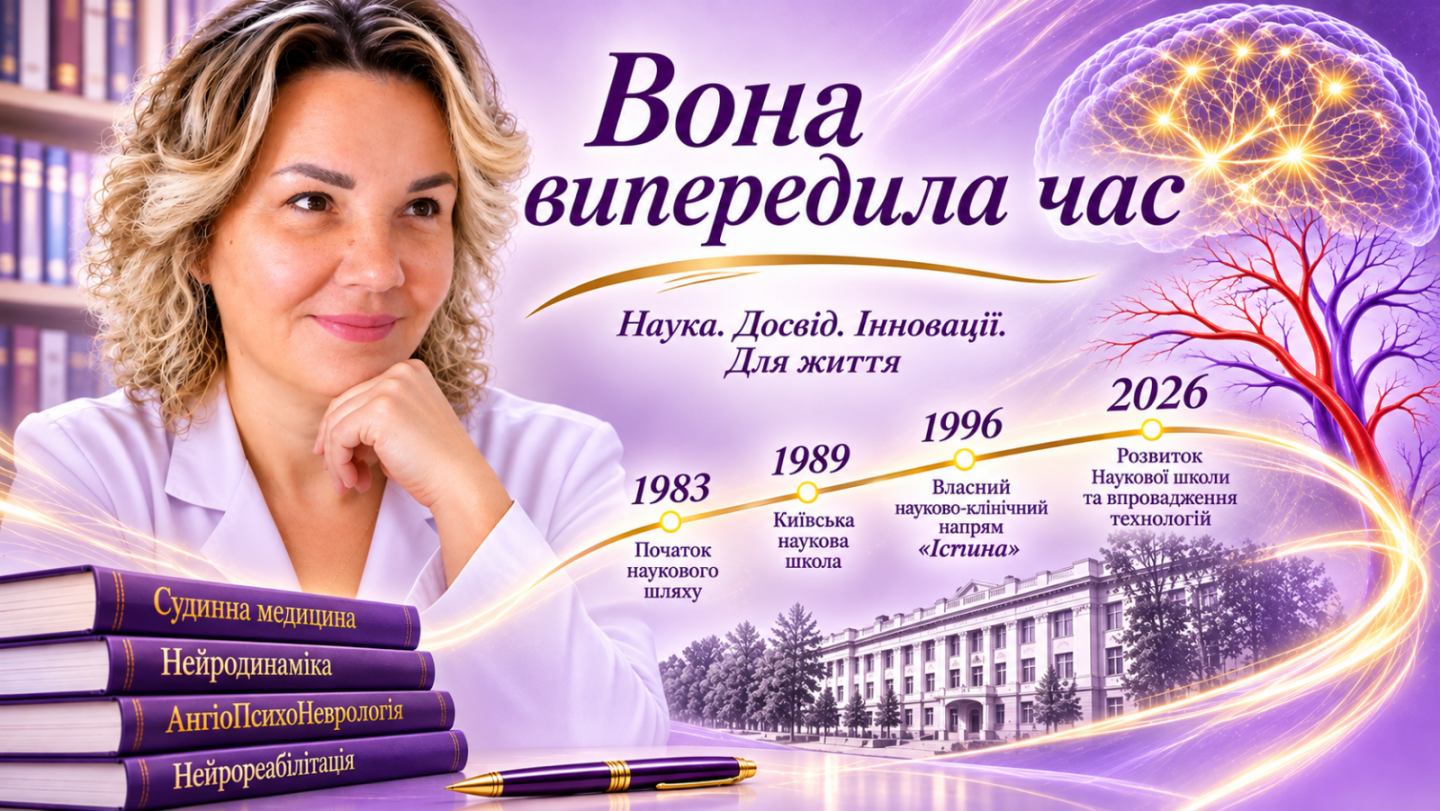
From the first studies of cerebral hemodynamics to the scientific system of vascular medicine, neurodynamics and neurorehabilitation.
A scientific journey that began before the establishment of the Scientific School
The history of Ulyana Lushchyk’s research did not begin with the founding of Istyna in 1996, nor with her meeting Professor Viktor Novytskyy. Its early foundations were laid during her university years, through her work in clinical neurology, research into cerebral hemodynamics, and the practical correlation of clinical findings with instrumental data and the outcomes of vascular surgery.
1983–1988. Student science and the first studies of blood circulation
The first student research presentation took place in 1983. Between 1984 and 1988, the research focused on the effects of medications on cerebral hemodynamics, including observations on the use of Cavinton, Halidor, and combined therapy, with the application of Doppler ultrasound. Archival research papers, diplomas, and reviews reflect an early research approach: clinical problem — instrumental assessment — intervention — follow-up examination — clinical conclusion.
In simple terms, the essence of these student projects can be explained as follows: the aim was not merely to prescribe a medication and record subjective improvement, but to examine what had happened to the brain’s blood supply and how this correlated with the clinical response. This research habit — returning to measurements after an intervention — became a consistent guiding principle over the following decades. This does not mean that the student research already incorporated modern algorithms, but it clearly demonstrated the direction of her thinking.
In plain language, the meaning of these student papers can be explained as follows: it was important not to simply prescribe a remedy and record subjective improvement, but to ask what happened to the blood supply to the brain and how this correlated with the clinical response. This research habit of returning to measurement after exposure became the overarching logic of the following decades. It did not mean that the student studies already contained modern algorithms, but it clearly showed the direction of thinking.
1989–1995. Clinical-surgical verification and independent research
In 1995, Ukrainian Patent No. 10262A, “Method for Ultrasound Diagnosis of Cerebral Blood Vessel Conditions,” was registered. It holds a distinct place in the history of an independent clinical and diagnostic field that had taken shape before the collaboration with V. V. Novytskyy.
The patent is more than just a date in a list of inventions. In this history, it marks the transition from formulating a clinical question to establishing a specific diagnostic solution. At the same time, the fact of patent registration confirms the formal recognition of the claimed technical solution; it does not, in itself, replace an assessment of diagnostic accuracy or clinical effectiveness. The full attribution of the inventors is reproduced from the official document.
1996. The first book, Istyna Scientific and Methodological Center and a new stage of cooperation
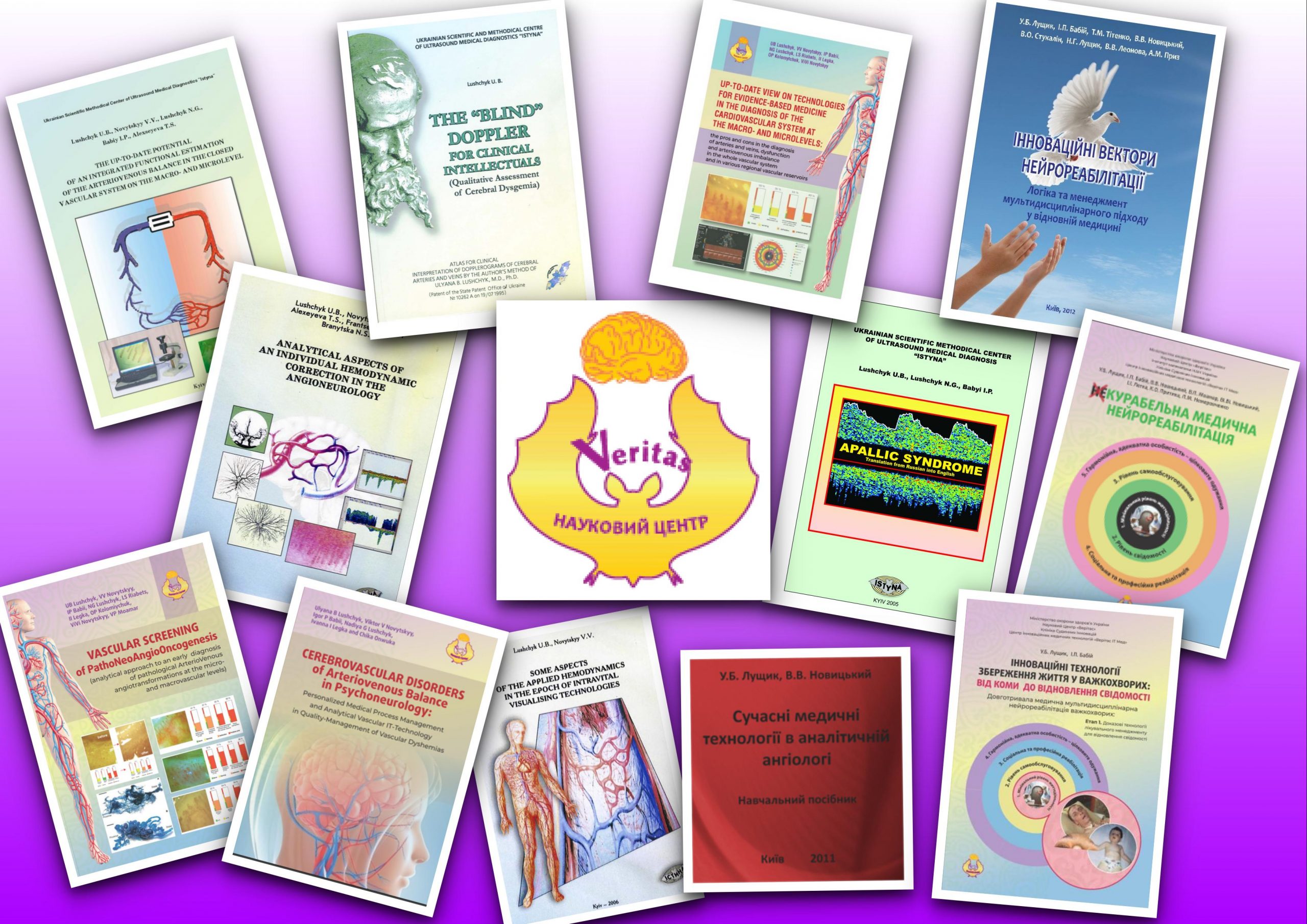
In 1996, Ulyana Lushchyk’s first book, Fundamentals of Clinical Ultrasound Diagnosis of Cerebrovascular Diseases (Kyiv, 136 pages), was published. It presented a systematic clinical approach to the analysis of cerebrovascular disorders, taking into account arterial and venous blood flow, collateral circulation, anatomical features, and neurological symptoms. The publication was the outcome of research conducted in the preceding years, rather than the starting point of her scientific work.
The first book is important not merely as a textbook on the use of an ultrasound probe, but as an attempt to establish a language for the clinical understanding of blood flow. The arterial system shows the pathways through which blood reaches the brain; the venous system reflects the capacity for blood outflow; collateral vessels provide alternative pathways for compensation. In the living brain, these elements are significant in their relationship to neurological symptoms. This gave rise to a question that would shape the following decades of research: can an organ receive an adequate blood supply if one component of the system is assessed without taking the others into account?
The first book (1996) demonstrated that her research expertise was already well established and provided important material for the training of other physicians. Its 136 pages, bibliography of 431 references, and approval for printing on November 1, 1996, give this stage of her scientific history a precise documentary dimension.
In the same year, the Istyna Scientific and Methodological Centre was established, providing an organizational foundation for integrating clinical practice, diagnostics, treatment, scientific research, and education. Scientific collaboration with Professor Viktor Volodymyrovych Novytskyy, Doctor of Physical and Mathematical Sciences, also began in 1996. Mathematical and biophysical methods of analysis were introduced into the established clinical field, including hydrodynamics, modelling of blood flow in vessels with complex geometries, the non-Newtonian properties of blood, vascular remodelling, and the influence of the surrounding tissue environment.
The partnership between clinical medicine and mathematics was distinctive in that the physician formulated the problem from the perspective of an individual patient, while the mathematician helped investigate the underlying mechanism as a system of interdependent processes. This neither diminishes U. B. Lushchyk’s own scientific contribution already achieved by 1996 nor detracts from Professor V. V. Novytskyy’s fundamental contribution to the subsequent development of the hydrohemodynamic approach.
1997–2000. Arterial inflow and venous outflow as the basis of clinical decision making

The next methodological publication, Fundamentals of the Methodology of Ultrasound Diagnosis of Cerebral Blood Vessels (1997), further developed the instrumental approach. The doctoral dissertation, “Specific Features of Changes in Arterial and Venous Blood Supply to the Brain in the Diagnosis and Treatment of Cerebrovascular Diseases in People of Different Age Groups,” was defended in 1998, and the doctoral degree certificate was awarded in 1999. The dissertation research, which had begun earlier, was carried out with clinical verification involving vascular neurosurgeons. This made it possible to compare functional parameters with neurosurgical assessments of vascular pathology.
In 1999, U. B. Lushchyk published the methodological guidelines “The Significance of Changes in Arterial and Venous Blood Supply to the Brain in Selecting Vasoactive Agents for the Treatment of People of Different Age Groups” (28 pages). Their fundamental contribution was the shift from describing hemodynamic disorders to substantiating individualized choices of pharmacological intervention. In 2000, a separate publication, “The Significance of Changes in Arterial and Venous Blood Supply to the Brain in the Diagnosis and Treatment of Cerebrovascular Diseases in People of Different Age Groups,” further developed this approach within a broader clinical framework: diagnosis — interpretation — selection of treatment strategy — monitoring.
1996–2005. Neurodynamics and the development of clinical AngioPsychoNeurology
Since 1996, the Istyna Scientific and Methodological Centre has systematically developed research into the functional state of the brain, neurodynamics, and the prospects for neuroplasticity. The findings of clinical and ultrasound examinations were compared with electroencephalography (EEG), as well as CT and, later, MRI data. Structural neuroimaging made it possible to describe brain lesions, while dynamic EEG recordings provided insight into electrical activity, biorhythmic organization, and brain reactivity. EEG is not a direct measure of neuroplasticity, but changes in EEG patterns may constitute one component of a multidimensional approach to functional monitoring.
Articles and conference abstracts published between 1995 and 2005 explored the relationships between cerebral circulation and psychoneurological manifestations, cognitive, emotional, behavioural, and neurological functions. This led to the development of Clinical Angio-Psycho-Neurology — an integrative approach to analysing psychoneurological conditions with consideration of hemodynamics, cardiodynamics, cerebrospinal fluid dynamics, neurodynamics, and pharmacological effects. This approach does not attribute all mental disorders to vascular causes; rather, it examines the role of relevant pathophysiological factors in each individual patient.
The concept of neurodynamics in this context should be explained in accessible terms. CT and MRI help visualize the structure of the brain and changes in its tissues, whereas EEG provides information about electrical activity at a given moment and how it changes over time. None of these methods alone can provide a complete picture of an individual. Combined with clinical tests, examinations, and assessments of behaviour, speech, sleep, and emotional responses, they help monitor the condition and dynamics of the nervous system.
For complex psychoneurological conditions, this represents a fundamental shift in perspective: a diagnosis describes a group of manifestations, but an actual treatment strategy must take into account the combination of vascular, neurophysiological, cognitive, behavioural, and pharmacological factors in each individual. The scientific school refers to this integrative field as Clinical Angio-Psycho-Neurology. The role of each of these components must be clinically established for every specific disorder rather than automatically assumed.
1999–2005. From Angiotherapy to Medical AngioNeuroTherapy

The development of individualized pharmacological support continued the line of research established through student projects, dissertations, the 1999 methodological guidelines, and the 2000 monograph. Specialized Ukrainian Patent No. 72868A, relating to pharmaceutical compositions for correcting arterial-venous imbalance, documents a distinct stage of this work. At Istyna, the practice of repeated assessment of arterial and venous circulation, functional brain activity, and clinical response was further developed. This became the foundation for subsequent fields of AngioTherapy, AngioCorrection, AngioNeuroTherapy, and pharmacological neuropsychological rehabilitation.
For someone without a medical background, the difference between standard and personalized approaches is straightforward: the same symptom does not necessarily arise from the same underlying mechanism. Therefore, the question “Which medication should be prescribed for this symptom?” is supplemented by further questions: “What exactly is impaired?”, “What outcome do we expect?”, and “Which parameters will we use to evaluate the response?” Within the Scientific School, this approach became one of the foundations for scientifically substantiated AngioTherapy and AngioCorrection technologies.
2003–2005. From arteriovenous balance to a vascular blood vessel model
The need to explain the functional relationships between arterial inflow, the capillary network, and venous outflow contributed to the development of the concept of the vascular blood-conduction system — an integrated system of blood transport that can be investigated using applied hydrodynamics. The analogy with a water supply system served as a way of formulating mathematical and physical questions, but it did not replace the actual properties of the living vascular system, its autoregulation, or the non-Newtonian behaviour of blood.
In 2003, U. B. Lushchyk and N. S. Branitska published “Study of Arteriovenous Equilibrium: Applied Aspects of Ultrasound Dopplerography”, with V. V. Novytskyy serving as the reviewer. In 2005, U. B. Lushchyk and V. V. Novytskyy published “Some Aspects of Applied Hemodynamics in the Era of Imaging Technologies.” Together, these publications outlined the development of an interdisciplinary approach to the analysis of blood circulation.
The vascular blood-conduction system model made a complex subject more accessible across different disciplines. As in a pipeline system, it is not enough to know only the condition of the inlet; it is necessary to understand what happens along the entire fluid pathway and where pressure gradients and obstructions arise. However, living blood vessels differ from pipes: they respond and change their tone, interact with surrounding tissues, and blood itself has complex rheological properties. This is where the analogy ends and mathematical and biophysical research begins.
1999–2013. Microcirculation, capillaroscopy and two levels of vascular analysis
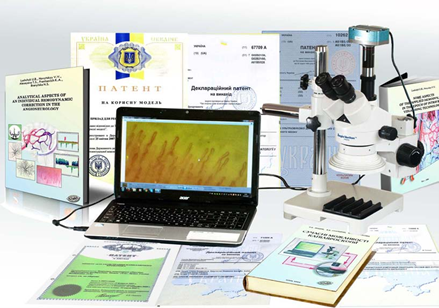
Alongside the assessment of major vessels and cerebral blood flow, a capillaroscopic research field had been developing at Istyna since 1999. The initial use of an optical instrument dating back to the 1960s, with images displayed on a monitor, gradually evolved towards improved imaging, digital documentation, and analysis. The monograph “Modern Capabilities of Capillaroscopy” (2004; U. B. Lushchyk, V. V. Novytskyy, and Yu. O. Kolosova) became one of the important milestones in this process. Patent documents relating to capillaroscopy, a capillary blood flow recording device (2007), and vascular screening (2013) reflect subsequent stages of technological development.
On this basis, two complementary instrumental approaches were developed: ultrasound-based functional analysis using the AngioMarkers system and optical Microvascular Screening (MSS). Their combined application made it possible to compare macrovascular and microvascular characteristics during clinical monitoring. The diagnostic parameters of each technology must be evaluated according to specific clinical indications.
The macrovascular and microvascular levels provide different types of information. Ultrasound examination reveals blood flow characteristics in arteries and veins accessible for assessment, while optical capillaroscopy makes it possible to observe part of the microcirculatory network. When these findings are compared with clinical manifestations and repeated measurements, a broader functional profile can be established. This is how the significance of AngioMarkers and MSS can be explained without making an unsubstantiated promise of being able to “detect every disease.”
1997–2025. Neurorehabilitation: from severe impairment of consciousness to functional recovery

The preservation of brain viability and the restoration of its functions became a separate central focus of scientific and clinical work. The monograph “Apallic Syndrome” (U. B. Lushchyk, N. H. Lushchyk, I. P. Babii, 2003) summarizes, according to the internal record, six years of experience working with 43 patients in comatose states and with apallic syndrome. Patent No. 72725A, “Method of Neurorehabilitation of Patients with Apallic Syndrome,” and Patent No. 71505A, “Method of Treatment of Seizure Syndrome,” document two distinct but related therapeutic approaches.
In 2004, “Diagnostic Algorithms for Assessing Cerebral Dyshemias and Neurorehabilitation of Neurosurgical Patients” was published. The monograph “Innovative Vectors in Neurorehabilitation: The Logic and Management of a Multidisciplinary Approach in Restorative Medicine” (2012) systematized a multidimensional rehabilitation strategy. In 2025, the fields of long-term recovery were explored in the books “INcurable Medical Neurorehabilitation” and “Innovative Technologies for Preserving Life in Critically Ill Patients: From Coma to the Recovery of Consciousness.”
Within the clinical approach of the Scientific School, successful recovery is associated with a combination of maintaining blood circulation, assessing neurodynamics, individualized pharmacological support, neuroplasticity, rehabilitation activities, and monitoring outcomes. Historical monographs document this research strategy; specific treatment outcomes, including categories of functional recovery, are presented with reference to patient descriptions, assessment methods, and observation periods.
It was particularly in working with patients after coma, those with apallic syndrome, and individuals with severe psychoneurological disorders that the simple opposition of “structural brain damage is present — therefore, there is no prospect of recovery” proved insufficient to describe the entire clinical course. The Scientific School developed questions concerning preserved responses, functional reserves, levels of consciousness, neurodynamic changes, restoration of communication, self-care abilities, and potential social adaptation. These goals represent different levels of complexity and cannot be regarded as guaranteed outcomes for every patient.
2008–2011. From clinical experience to analytical angiology

The commemorative publication Istyna: 12 Years of Innovation (2008) and the Istyna archive website document the development of scientific, diagnostic, therapeutic, neurorehabilitation, and educational areas of work between 1996 and 2008. This is a historical institutional body of material, distinct in purpose from peer-reviewed clinical research. The monograph by U. B. Lushchyk and V. V. Novytskyy, Modern Medical Technologies in Analytical Angiology (2011), reflects the next stage in the systematization of the functional analysis of blood circulation and its clinical application.
The historical significance of the 2008 publication lies in its ability to demonstrate that, by that time, the work had evolved beyond an isolated invention into a set of interconnected fields: diagnostics, treatment, neurorehabilitation, education, scientific and methodological work, and equipment development. The 2011 book, Modern Medical Technologies in Analytical Angiology, represents the next step — a transition towards a more structured analytical description of the clinical system.
From hemodynamic to pathophysiological matrix
Further research contributed to the development of the Hemodynamic Matrix, the Pathophysiological Matrix, and individually tailored roadmaps for monitoring and treatment. Within the Scientific School, these concepts describe an attempt to integrate data from multiple levels — vascular, neurophysiological, clinical, and functional — into a single, manageable analytical system. Mathematical modelling, serial monitoring, and the revision of treatment strategies are integral parts of this concept.
In simple terms, the matrix-based approach is intended to help preserve important connections among numerous examination findings, symptoms, risks, responses to treatment, and changes over time. Its scientific value is determined not by the complexity of its name, but by its ability to formulate testable clinical questions, support interpretation, and ensure consistent monitoring. The diagnostic and clinical applicability of each technology must be established separately, including its limitations.
SCIENTIFIC AREAS — WHAT HAS BEEN DEVELOPED AND WHERE IT IS DOCUMENTED
1. Cerebral Ultrasound and Clinical Hemodynamics
Where it is documented: Candidate’s dissertation (defended in 1994; vascular surgeons); Patent No. 10262A (1995); Fundamentals of Clinical Ultrasound Diagnosis of Cerebrovascular Diseases (1996); Fundamentals of the Methodology of Ultrasound Diagnosis of Cerebral Blood Vessels (1997); doctoral dissertation (defended in 1998; vascular neurosurgeons).
2. Arteriovenous Balance and Applied Hydrohemodynamics
What has been developed: A systematic description of the interaction between arterial inflow, microcirculation, venous outflow, pressure, blood rheology, and vascular geometry; development of the vascular blood-conduction model through collaboration between medicine and mathematics. Why both inflow and outflow, as well as the microvascular component, are essential to the blood supply system.
Where it is documented: Study of Arteriovenous Equilibrium (Lushchyk and Branitska, 2003; Novytskyy as reviewer); Some Aspects of Applied Hemodynamics in the Era of Imaging Technologies (Lushchyk and Novytskyy, 2005); a 2006 publication on integrated functional assessment.
3. AngioMarkers and Hemodynamic Monitoring
What has been developed: The development of functional indicators and the serial interpretation of ultrasound data in a clinical context. Why repeated measurements following a therapeutic intervention are important for interpreting changes over time.
Where it is documented:Books published between 1996 and 2000; publications on cerebral dyshemias (2004); Modern Medical Technologies in Analytical Angiology (2011).
4. Capillaroscopy and Microvascular Screening
What has been developed: The evolution from optical observation and digital documentation of capillaries to the development of microvascular analysis technologies. How the microvascular level complements the macrovascular level, and what the limitations of interpreting each level are.
Where it is documented: Current Potential of Capillaroscopy (2004; Lushchyk, Novytskyy, and Kolosova); Patent No. 67709; patent for a device No. 22944 (2007); Patent No. 85052 (2013).
5. AngioTherapy and Pharmacological AngioCorrection
What has been developed: The transition from studying blood flow to the individualized rationale for vasoactive therapy and dynamic monitoring of the response. Treatment decisions are linked to the clinical problem, underlying mechanism, therapeutic objective, risks, and monitoring.
Where it is documented: Candidate’s dissertation (1994); doctoral dissertation (1998); methodological guidelines on the selection of vasoactive agents (1999); a book on the diagnosis and treatment of people of different age groups (2000); Patent No. 72868A (pharmaceutical compositions); publications on hemodynamically monitored therapy.
6. Neurodynamics, EEG, and Neuroplasticity
What has been developed: The parallel study of the brain’s functional activity alongside its vascular supply; correlation of ultrasound, EEG, CT/MRI, and clinical functions. Structural brain imaging and functional brain activity address different clinical questions.
Where it is documented: Articles and conference abstracts from 1995–2005 included in the current bibliography; Istyna materials dating from 1996; the commemorative publication Istyna: 12 Years of Innovation (2008); current research areas of the Veritas Scientific Centre.
7. Clinical AngioPsychoNeurology
What has been developed: Integration of vascular, neurological, cognitive, emotional, behavioural, and pharmacological assessment; pharmacological neuropsychological rehabilitation. A psychoneurological symptom does not necessarily indicate one universal mechanism; individualized assessment is required.
Where it is documented: Articles and conference abstracts from 1995–2005; Patent No. 71505A concerning seizure syndrome; Istyna materials from 2008; specialised publications on neurodynamics and neurorehabilitation.
8. AngioNeuroTherapy and Medical Neurorehabilitation
What has been developed: Comprehensive care for critically ill patients with impaired consciousness, movement, communication, and behaviour; monitoring of functional reserves and long-term recovery. The goal of rehabilitation is not merely survival, but the greatest possible functional recovery, without guarantees for every individual case.
Where it is documented:Apallic Syndrome (2003; the internal record lists 43 patients over six years); Patent No. 72725A; Diagnostic Algorithms for Assessing Cerebral Dyshemias and Neurorehabilitation of Neurosurgical Patients (2004); Innovative Vectors in Neurorehabilitation (2012); two specialised monographs published in 2025.
9. Analytical Angiology, Matrices, and Knowledge Transfer
What has been developed: Integration of data from multiple levels into clinical analytics, mathematical modelling, serial monitoring, quality control, and professional knowledge transfer. What is being implemented is not merely a device or a named technology, but also the competencies, assessment protocols, and culture of outcome monitoring.
Where it is documented: Istyna: 12 Years of Innovation (2008); Modern Medical Technologies in Analytical Angiology (2011); later monographs and materials of the Veritas Scientific Centre and the Scientific School.
Why she was ahead of her time
An important contribution of Ulyana Lushchyk was the early shift in focus from an isolated vascular finding to the interrelationship between arterial inflow, venous outflow, collateral compensation, microcirculation, and brain function. Professor Viktor Novytskyy helped deepen this already established field through mathematical and biophysical thinking. Together, they developed a model of blood circulation as an interdependent dynamic system in which not only structural changes matter, but also functional relationships and their dynamics.
One of the conceptual principles of the Scientific School is the functional priority of adequate blood supply and the interrelationship between vascular, neurodynamic, and metabolic levels in the restoration of impaired functions. Its practical approach involves identifying hemodynamic imbalances, assessing compensatory capacities, substantiating therapeutic interventions, and conducting follow-up monitoring. The priority given to blood supply is presented as the Scientific School’s own conceptual position, rather than as a universal hierarchy applicable to every disease.
This journey represents a transition from individual measurements to systemic research, from static conclusions to dynamic monitoring, and from general treatment protocols to individually tailored strategies. The Scientific School of Vascular Medicine, Neurodynamics, and Neurorehabilitation, founded by Academician of the Academy of Technological Sciences of Ukraine (ATSU) Ulyana Lushchyk, continues to develop this approach through research, education, and clinical practice. The openness of the concept is combined with the protection of its technological implementation.
Significance for Medicine and Society
What does this journey mean for civilization? First and foremost, it offers the opportunity to ask broader scientific questions: to study not just one isolated indicator, but the interaction of functional systems; to see a person not merely through the lens of a diagnosis, but in terms of their overall condition, preserved resources, and changes over time. This is a direction in the development of personalized medicine, in which measurements, clinical judgment, mathematical analysis, and longitudinal observation can work together.
For patients, this approach means receiving a clear explanation of why a physician assesses not only a symptom, but also the functional conditions underlying its development. For physicians, it provides a methodology for clinical reasoning and a discipline of follow-up monitoring. For researchers, it raises questions that can be investigated and tested. For healthcare administrators, it offers an opportunity to build high-quality processes for diagnostics, documentation, patient care, and auditing.
At the same time, broad societal significance is established not by the boldness of claims, but by the ability to transfer knowledge, train specialists, reproduce technological processes, verify outcomes, and ensure patient safety. That is why an open description of a scientific concept must be complemented by professional education, a quality management system, and responsible technology transfer.
From Scientific Legacy to Education and Implementation
A scientific journey does not end on the pages of a biography. Today, it is represented by an interconnected system: Ulyana Lushchyk’s personal website preserves the history of research and its primary sources; the Veritas Scientific Centre addresses scientific questions, the technological platform, and knowledge transfer; the Scientific School provides professional education and methodological continuity; and the Clinic of Vascular Innovations serves as the clinical setting for the practical application of these areas.
For Physicians: Mastering Scientifically Grounded Technologies
Training should begin with the fundamentals: understanding arterial and venous circulation, ultrasound, EEG, and capillaroscopic observations; proceed to clinical analytics and personalized decision-making; and culminate in the practical application of monitoring, quality control, and patient safety. Specific educational areas include AngioMarkers, Microvascular Screening (MSS), applied hydrohemodynamics, personalized AngioTherapy, neurodynamics, and neuroplasticity.
For Clinics: Technology Transfer and Partnership
A medical centre seeking to operate according to the standards of the Scientific School should receive more than just the names of methods. It should have access to a comprehensive implementation system that includes team training, access to authorised technologies, research quality criteria, documentation protocols, safety oversight, outcome monitoring, and organisational audits. Specific technologies and transfer arrangements are determined through separate legal, clinical, and educational procedures.
For Partners and Investors: A Clinical Network Development Model
A franchise or other partnership model for the Clinic of Vascular Innovations could be based on standardised training, licensed access to relevant developments, brand requirements, operational support, and continuous quality control. This opportunity should be considered a separate proposal with clearly defined terms, rather than a product that is automatically available. A scientific article explains the rationale for interest, while a dedicated partnership page should subsequently outline the business and legal model.
Choose Your Next Step
For Patients — explore the clinical services offered by the Clinic of Vascular Innovations.
For Physicians — review the Scientific School’s educational programmes.
For Researchers and Medical Organisations — contact the Veritas Scientific Centre regarding research and technology transfer.
For Potential Partners — submit an enquiry to discuss the clinic establishment model.
From Vascular Chaos to Hemodynamic Harmony in Blood Circulation.
Blood circulation is the foundation of the body’s viability.
